The 11-Year-Old From Waterloo Who Redesigned the Classroom for Everyone
Georgie Alexander Atanasov Hidalgo is the first Canadian ever named a global winner of MED-EL's IDEASforEARS invention contest — chosen from 302 children across 25 countries for an idea born out of his own school day.
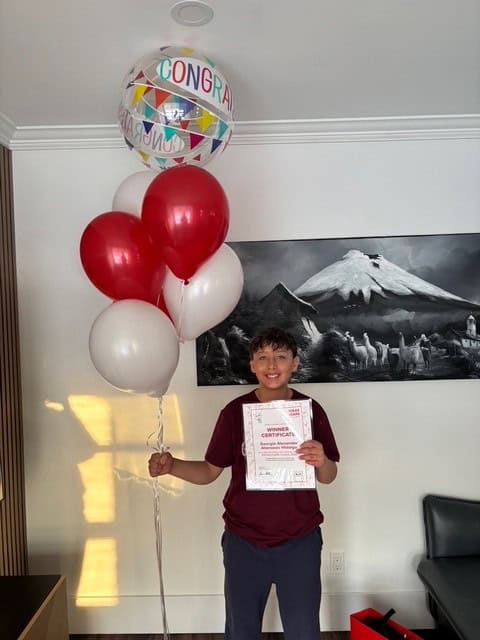
Innovation almost always starts the same way: a small idea, and the nerve to think differently. For Georgie Alexander Atanasov Hidalgo, it started somewhere very ordinary — his own Grade 6 classroom in Waterloo, Ontario.
Georgie, 11, hears with a BONEBRIDGE implant and a SAMBA 2 audio processor. He is also the kid who quietly translates for the classmates around him who speak Spanish — while trying to keep up with the lesson himself. So when MED-EL's global children's invention contest, IDEASforEARS, invited kids around the world to invent something that would improve life for people with hearing loss, Georgie didn't have to look far for a problem worth solving. His answer was ALLHearTogether. It made him one of just nine global winners — and the first Canadian ever to take the honour.302Children
entered
25Countries
represented
9Global
winners
1Canadian
first
A Canadian first on a global stage
IDEASforEARS is an annual invention contest run by the Austrian hearing-implant company MED-EL, open to children aged 6 to 12. The brief is deliberately wide open: come up with a creative idea that makes life better for people with hearing loss. The 2026 edition drew ideas from 302 children across 25 countries — everything from water-safe implants and vibrating alarm bracelets to AI-powered swimming goggles. Nine were selected as global winners and flown to MED-EL's headquarters in Innsbruck, Austria. Georgie was among them.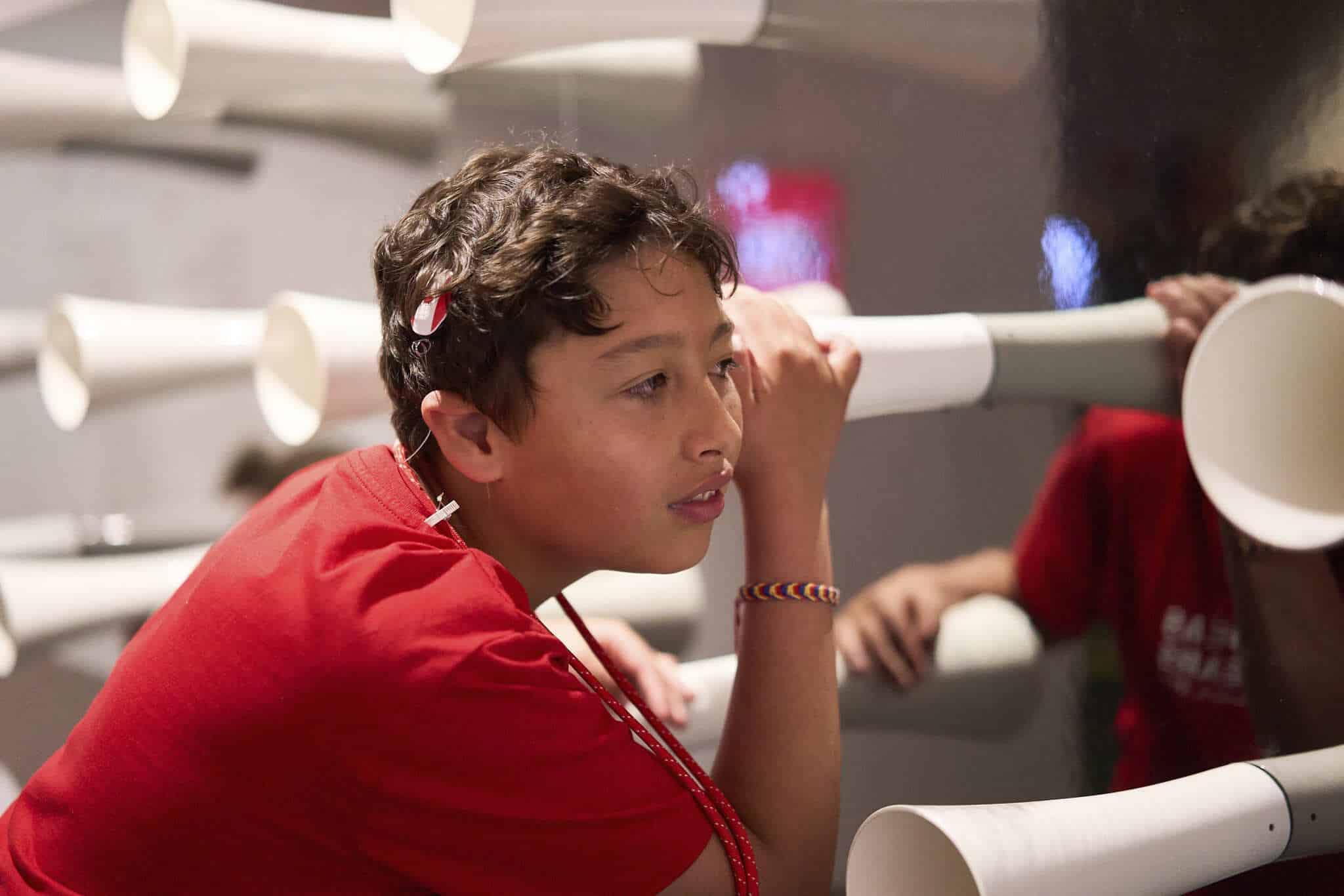
What ALLHearTogether actually does
ALLHearTogether connects to the teacher's voice and uses AI to turn a live lesson into something every student can follow — in whatever format works for their brain and their ears. It generates live subtitles, translations, plain-language summaries and visual aids in real time. Students choose their own language and their own learning style. And when they're lost, they can send the teacher a quiet, colour-coded signal — no hand in the air, no interrupting the class, no drawing attention to themselves.Live captions
Real-time subtitles of the teacher's voice, streamed directly to the student.On-the-fly translation
Lessons rendered in the student's own language, closing the gap for newcomers.Simplified summaries
Plain-language recaps and visual aids for students who need a different route in.Quiet help signals
Colour-coded cues that let a student flag confusion without saying a word.- Not being able to clearly hear the teacher
- Lessons that move faster than a student can process them
- Language gaps for kids still learning the classroom language
- Difficulty staying focused or processing information — including for students with ADHD
- The hidden load carried by students who translate or help peers while learning themselves
Two days in Innsbruck
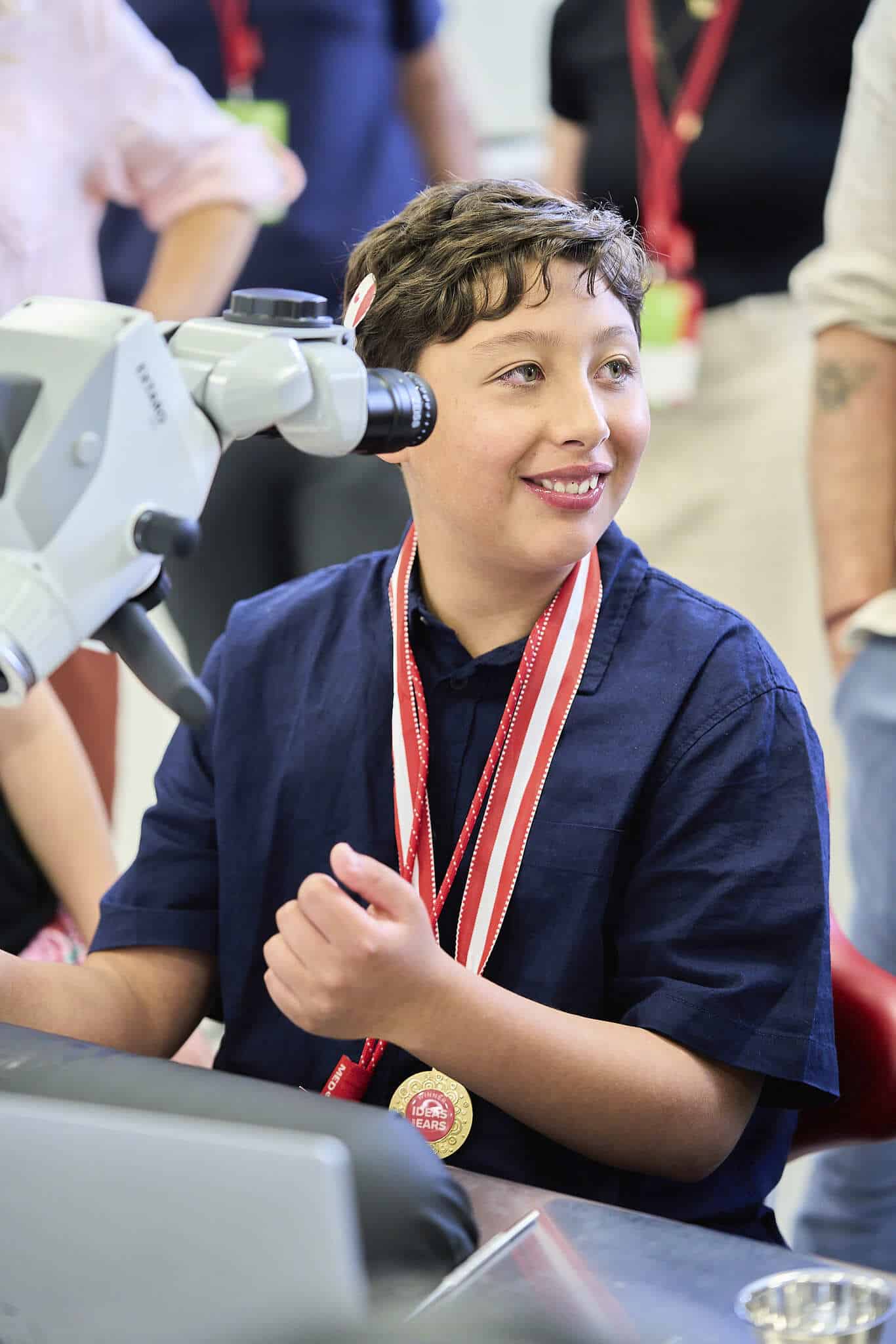
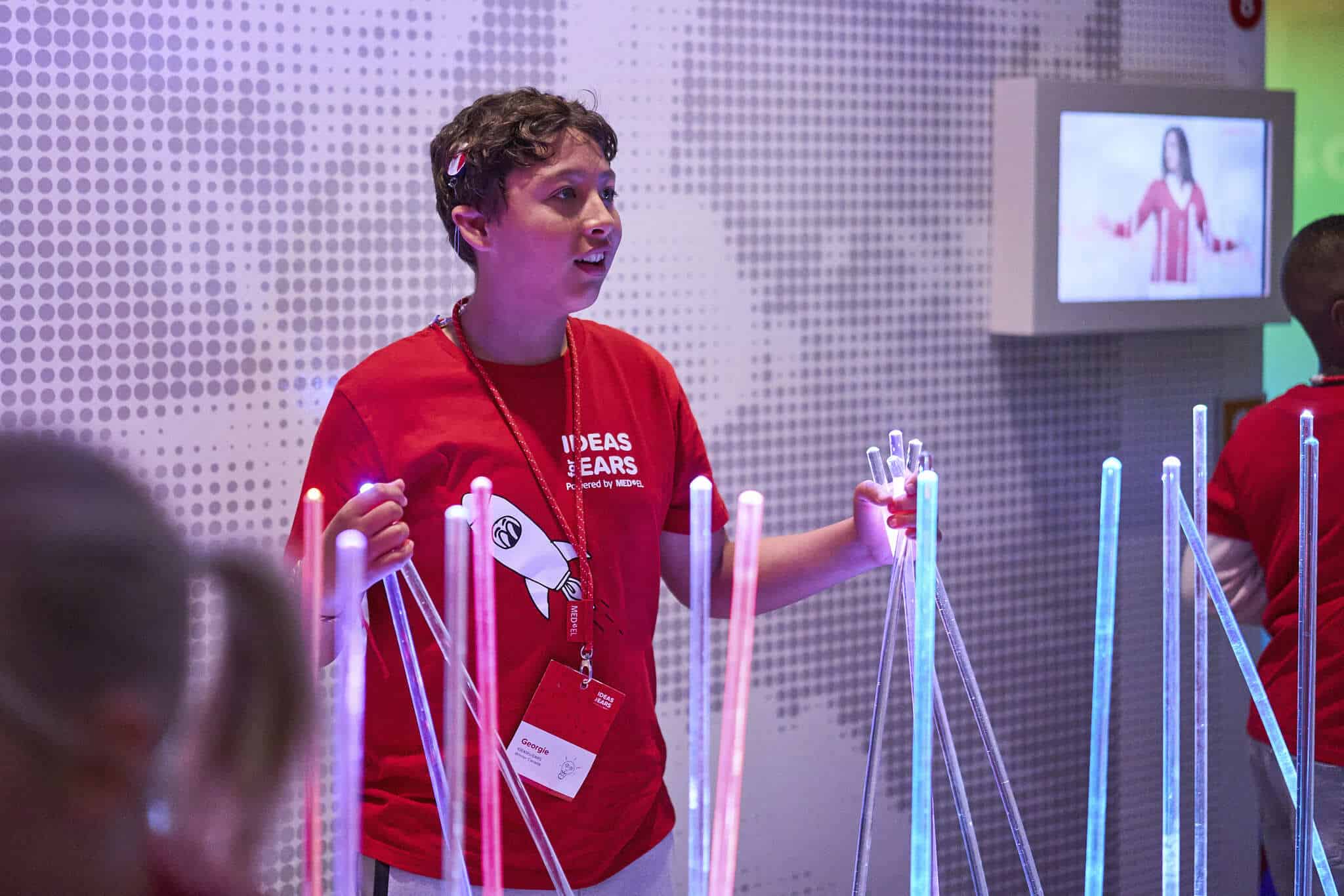
For the winners and their families, the trip to Austria was less a prize than an experience. Georgie travelled with his mother, Josely Hidalgo. Together they toured MED-EL's headquarters, presented Georgie's idea to the company's leadership, and met the engineers and hearing experts who build the very technology he wears.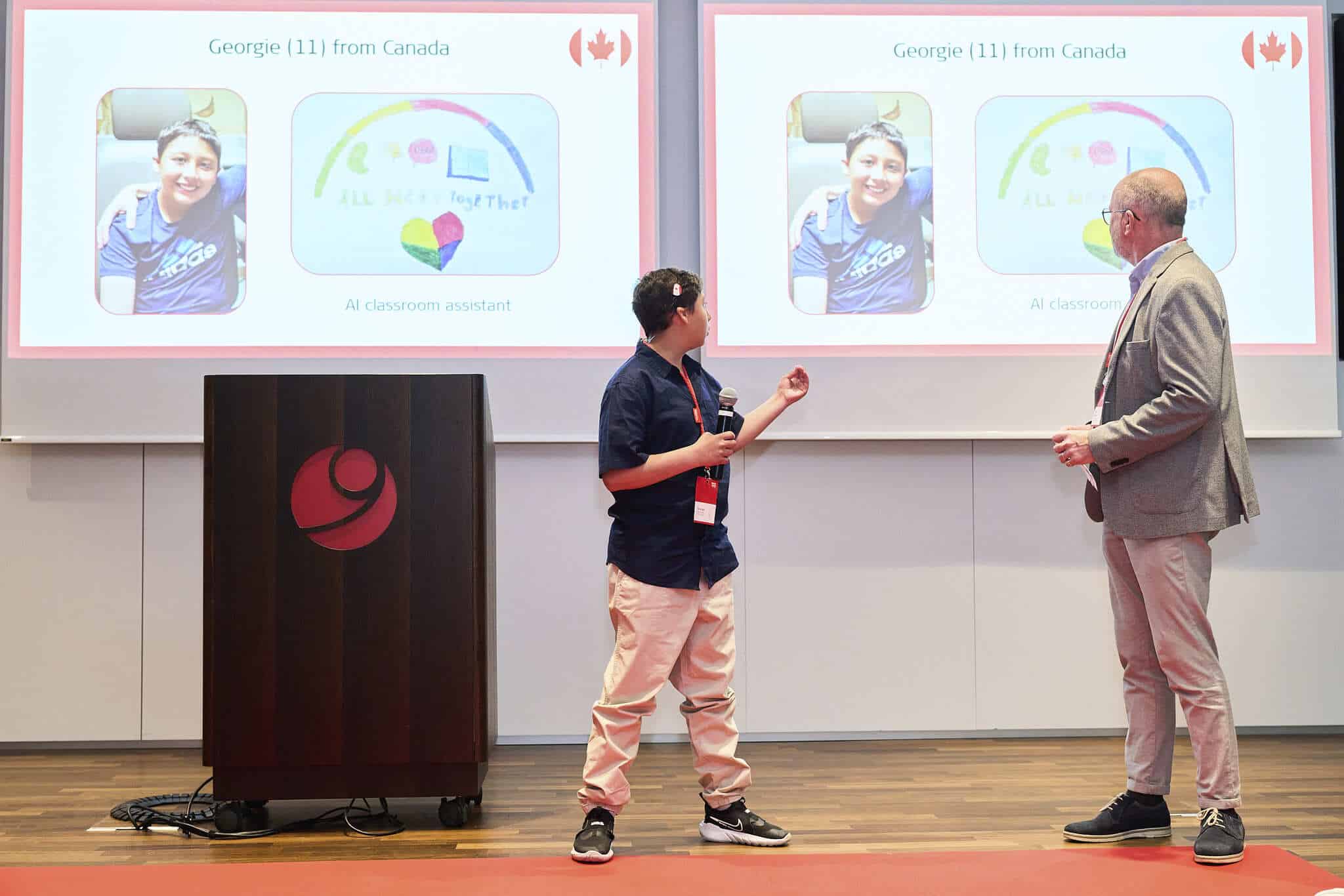
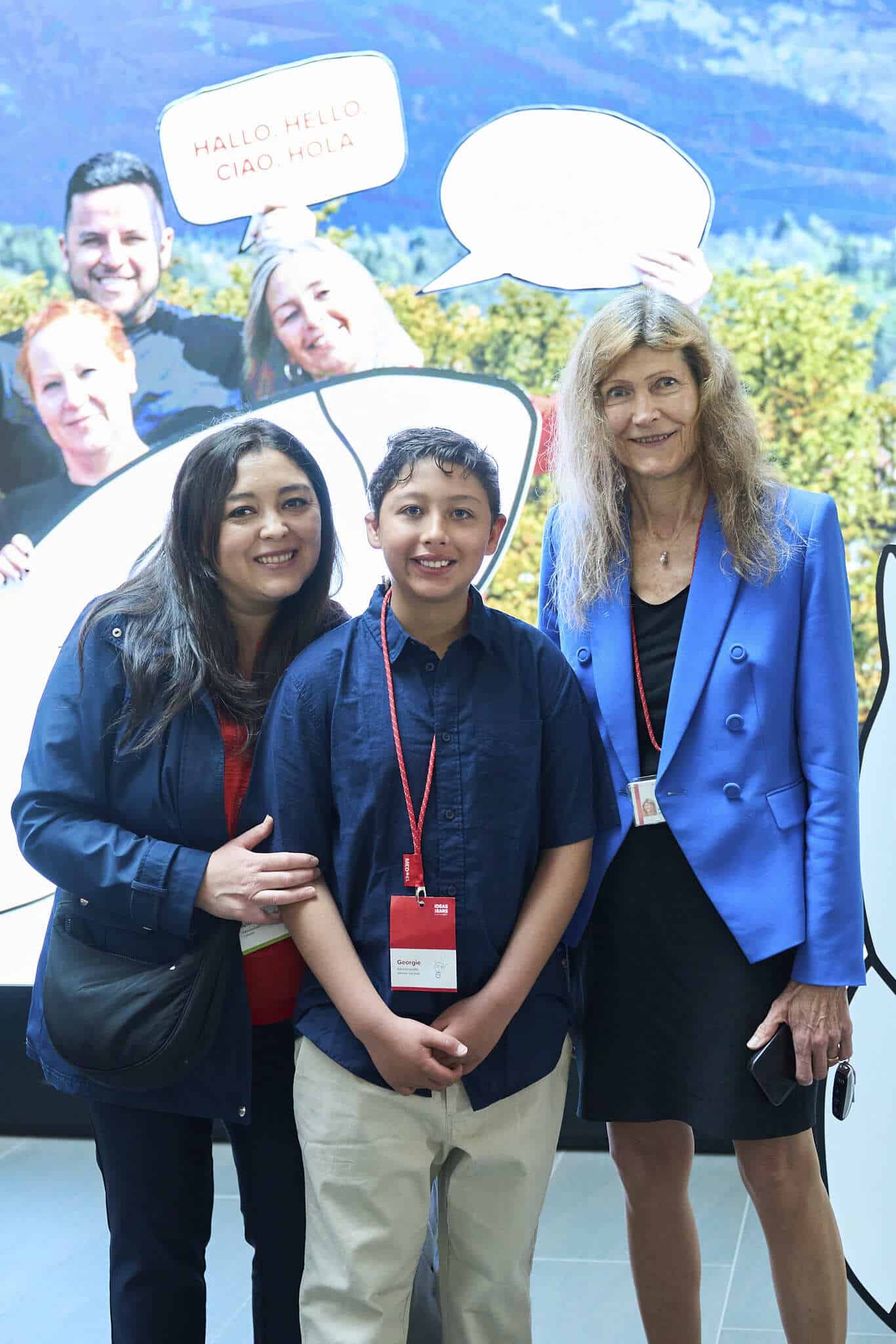
It means a lot to me! It was shocking and exciting at the same time, when I heard that I had won. It's exciting also to meet other kids with hearing implants and experience this with my family.
Georgie Alexander Atanasov HidalgoIDEASforEARS 2026 global winner, Waterloo, Ontario
My favourite part of this trip was that the creativity of Georgie has been recognized, and it's very inclusive. While his hearing journey has been wonderful, I am very excited to be here, sharing this experience with all the kids from around the world that created these amazing ideas.
Josely HidalgoGeorgie's mother
Why a contest like this matters
Children who use hearing technology aren't usually asked to help design it. IDEASforEARS flips that — and MED-EL's leadership is candid that the company gets as much out of it as the kids do.
The creativity and thoughtfulness behind these ideas are truly inspiring. These young inventors challenge us to see the world differently and remind us how important it is to design solutions based on real-life needs.
Jennifer RobinsonCorporate Director, Product Management Hearing Solutions, MED-EL
IDEASforEARS is about more than inventions — it is about empowering children to see themselves as innovators and problem-solvers. It shows them that even small ideas can have a big impact.
Dr. Patrick D'HaeseCorporate Director, Awareness and Public Affairs, MED-EL
We are incredibly proud of Georgie for representing Canada in the IDEASforEARS contest. It's inspiring to see young people bring forward such passionate, creative ideas and to celebrate their innovations together on a global stage.
Suzanne StewartVice President, MED-EL Canada
Accessibility built into the event itself
MED-EL's ongoing collaboration with Microsoft shaped how the event actually ran. Young inventors were equipped with Microsoft Surface devices featuring built-in accessibility tools and AI-supported translation, so children who shared neither a language nor a hearing ability could still collaborate and pitch ideas to one another directly. It quietly proved the point the contest is trying to make: accessible technology doesn't just remove barriers — it lets more voices into the room.What comes next
IDEASforEARS turns ten in November 2026, when the next edition opens to children around the world. Since 2017, the contest has drawn more than 1,700 entries from over 45 countries. If you know a young inventor aged 6 to 12 — in Waterloo, or anywhere else in Canada — the entry window opens this fall. Georgie has shown what a Canadian entry can do.Know a young Canadian inventor?
The tenth edition of IDEASforEARS opens to children aged 6–12 in November 2026. Visit IDEASforEARSLearn more
- IDEASforEARS official site & 2026 winners
- IDEASforEARS on Facebook
- How kids with hearing implants are shaping hearing tech
- MED-EL
About IDEASforEARSThe yearly IDEASforEARS children's invention contest challenges children aged 6–12 to develop a creative idea to improve the lives of people with hearing loss. Since its first edition in 2017, it has received more than 1,700 entries from over 45 countries. The grand prize is a trip to Innsbruck, Austria, where MED-EL is headquartered.
About MED-ELMED-EL Medical Electronics is a leader in implantable hearing solutions, driven by a mission to overcome hearing loss as a barrier to communication and quality of life. The Austrian-based, privately owned company was co-founded by Ingeborg and Erwin Hochmair, whose research led to the world's first micro-electronic multi-channel cochlear implant, successfully implanted in 1977. MED-EL today has more than 3,100 employees from around 90 nations across 30 locations worldwide, and people in 140 countries hear with the help of a MED-EL device.
Media contactAnthea Mulhall, Marketing Coordinator Canada, MED-EL — Anthea.mulhall@medel.com. Interviews with Georgie and MED-EL Canada representatives are available on request.