Not sponsored. Nobody paid to be featured and there are no affiliate links in this article. We share these links to support Canadian authors, creators, businesses and causes.
Key points
- Citizen of the Métis Nation-Saskatchewan, based in Regina
- Wild People Quiet (Simon & Schuster Canada, 2026) is a 2026 Giller Prize finalist
- Her novel Saltus was shortlisted for the 2022 ReLit Novel Award
- Former TV writer and story editor on CBC's Edgemont
Tara Gereaux grew up knowing she was Métis, but not hearing much about what that meant. Years later, back home on the Prairies, she set out to learn: she became a citizen of the Métis Nation-Saskatchewan, took jigging and Michif classes, and learned beadwork. That journey runs through her novel Wild People Quiet, published by Simon & Schuster Canada in March 2026 and now one of five finalists for the 2026 Giller Prize.
Coming home to Saskatchewan
Gereaux comes from the Qu’Appelle Valley and grew up in Fort Qu’Appelle and Winnipeg. She earned an MFA in creative writing from the University of British Columbia and spent years in Vancouver working in television, including as a writer and story editor on CBC’s Edgemont and a story editor on CTV’s Robson Arms. She later returned to the Prairies and now lives in Regina.
Back on the Prairies, she began learning about the culture she had been discouraged from talking about as a child.
Wild People Quiet
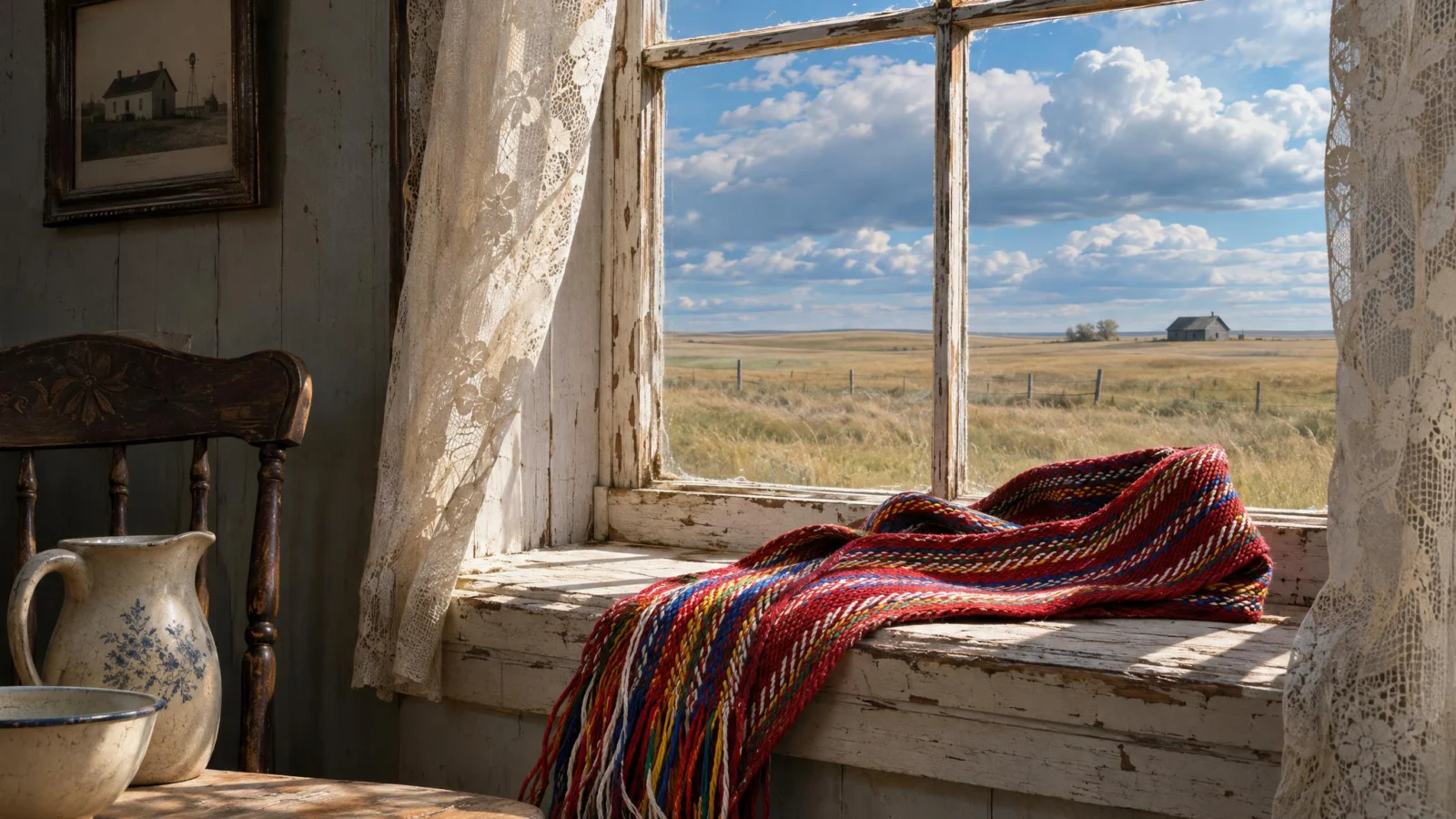
The novel is set in 1946 in the fictional town of Torduvalle, Saskatchewan. Florence Banks has a respected office job, owns her home and has spent decades hiding her Métis identity, down to bleaching her hair every week. Her careful life starts to come apart when her brother, a farmhand, calls out to her in town. Much of the book moves back and forth between Florence’s youth, from 1910 to 1913, and the present, and it shows the road allowance communities and the racism Métis families faced.
The book’s four sections are named for parts of Métis floral beadwork, which represents balance: Flowers, Leaves, Buds and Stems. The title draws on an 1869 remark attributed to John A. Macdonald, during the period of negotiations with Louis Riel, about keeping the Métis quiet.
A story rooted in family history
Gereaux has said she wrote the book “to understand the circumstances that my grandfather was living in when he was a young man.” Around 1946, he may have chosen to live as a white man. Her research into the clearing of road allowance communities in Saskatchewan in that era also shaped the story. To get the details right, she worked with an advisor and drew on resources from the Gabriel Dumont Institute.
The result is a quiet, closely observed book about what it costs to hide who you are, and about the history that pushed so many families to do it.
Her earlier work
Wild People Quiet builds on a steady body of work. Gereaux’s first book, the teen novella Size of a Fist (Thistledown Press, 2015), was nominated for two Saskatchewan Book Awards. Her novel Saltus, published by Nightwood Editions, was shortlisted for the 2022 ReLit Novel Award and three Saskatchewan Book Awards. She has won the City of Regina Writing Award twice, in 2016 and 2019, and was a 2017 laureate of the REVEAL Indigenous Art Award from the Hnatyshyn Foundation.
The Giller Prize winner, who receives $100,000, will be announced on November 16, 2026. Each finalist receives $10,000.
Where to learn more
Wild People Quiet is available at bookstores across the country. Saskatchewan readers can learn more about Gereaux and her earlier books through the Saskatchewan Writers’ Guild.
Her official website, taragereaux.ca, has more about all three of her books.
Questions and answers
What is Wild People Quiet about?
It is set in a small Saskatchewan town in 1946 and follows Florence Banks, a woman who has hidden her Métis identity for decades. Her secret begins to unravel when her brother calls out to her in town.
What inspired Tara Gereaux to write the novel?
She wanted to understand the circumstances her grandfather lived in as a young man around 1946, when he may have chosen to live as a white man. Research into the clearing of road allowance communities also shaped the book.
When is the 2026 Giller Prize winner announced?
The winner will be announced on November 16, 2026, at a televised ceremony hosted by Rick Mercer. The winner receives $100,000 and each finalist receives $10,000.